
The core consensus of $5000 profit-sharing traders: Stable profits rely on these 4 underlying habits
- 2026年3月10日
- Posted by: Eagletrader
- Category: News
In proprietary trading, many people will discuss a question: Why are some traders able to pass the assessment stably and gradually enter the profit-sharing stage, while others always keep going back and forth between profit and loss?
Many people’s first reaction is to think that this is a difference in trading strategies. But if you really observe those long-term stable traders, you will find a more interesting phenomenon – their methods may not be the same, but the underlying logic is very consistent.
In recent trader interviews, we had in-depth discussions with two traders, Chen Guijun and Jiang Hailiang, who have received profit sharing of US$5,000.
Their trading backgrounds, trading cycles and even the tools they use are different, but they show obvious commonalities in their trading habits and risk management. These commonalities may be the key to stable transactions.

The methods are different, but they all have complete trading systems
From the perspective of many novice traders, trading is “entering the market when you see an opportunity.” But for stable traders, trading is never a temporary decision, but a system based on long-term verification.

(Trader Chen Guijun)
For example, Chen Guijun uses typical trend trading logic, judging the trend direction through the moving average structure and key price breakthroughs. Trading decisions mainly revolve around the continuation of the trend, and the stop loss position will be clear before entering the market.
Jiang Hailiang’s trading logic is biased toward multi-cycle resonance. He mainly observes the 15-minute cycle, and combines the 1-hour and 4-hour large-level trends to determine the market direction, and then looks for entry opportunities through smaller-level price actions.
On the surface, the two methods are completely different: one favors trend following, and the other favors a multi-cyclical structure. But if you look at it from a deeper level, they actually have one thing in common – all transactions are based on a clear system of rules.
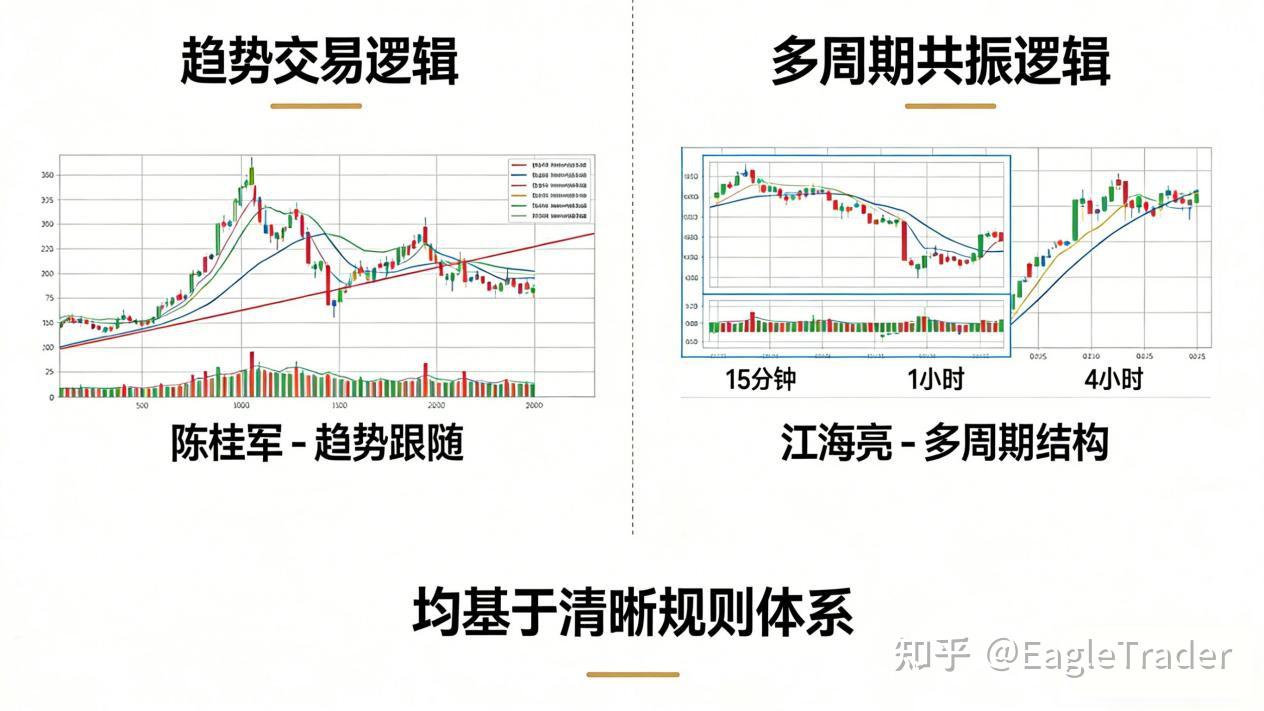
They will not change their plans at will due to intraday fluctuations, nor will they temporarily add positions or reverse operations due to emotional fluctuations.
For stable trading, the importance of the system is far higher than the profit and loss of a single transaction.
The core consensus of stable trading: Risk priority
If you want to To sum up, the most obvious commonality between these two traders must be the emphasis on risk control.
In the interview, both traders mentioned very clear risk boundaries.
Chen Guijun has clear limits on intraday retracements. 2%, he would stop trading or reduce risk exposure. In the early stage of the profit-sharing account, he experienced a significant retracement due to excessive risk exposure, and later adjusted his operating rhythm. alt=”” src=”/static/upload/image/20260310/1773106118131075.jpg” width=”654″ height = 368 As long as they are close to the threshold, they will actively shrink their positions.
In terms of risk control, the two traders have the same philosophy: control risks first, and then talk about profits.
Many traders are used to thinking about “how much can I earn from this order”, but stable traders are more concerned about: “How much will I lose if my judgment is wrong?” It is this difference in thinking that gradually widens the trading results.
Complete decision-making before trading, rather than intraday emotional trading
Another very obvious trading commonality is that both traders emphasized the formulation of plans before trading.
Chen Guijun will pre-set stop loss positions and key price areas before entering the market. , instead of frequently monitoring the market, he will let the market run according to the established logic and avoid human intervention.
Jiang Hailiang also adopts a similar approach: once the price falls below the key support level, he will leave the market decisively without any additional explanation. alt=”” src=”/static/upload/image/20260310/1773106118165527.jpg” width=”654″ height=”436″/>
The core logic behind this is actually very simple, that is, the real trading decision should occur before entering the market.
When traders frequently modify their plans and hesitate during the day, emotions have begun to affect the decision-making.
Stable traders are more likely to complete all key judgments in advance and are only responsible for executing the rules during the day. strong>Behind stable trading is long-term review
In addition to the trading system and risk control, the two traders also have a common habit: continuous review.
The frequency of review by Chen Guijun is about once every one to two weeks, focusing on checking whether each order complies with the trading system. If any deviation in execution is found, the trading discipline will be readjusted. alt=”” src=”/static/upload/image/20260310/1773106118122452.jpg” width=”654″ height=”436″/>
Jiang Hailiang prefers daily review, reviewing trading records after the market closes every day, analyzing the reasons for profits and losses, and summarizing whether the strategy needs to be optimized.
Many traders tend to only focus on market trends after losses. But they ignore a more important question: whether their transactions are actually executed according to the system. The purpose of review is to help traders constantly correct this deviation.
The formation of professional traders is never based on the accumulation of experience alone, but on the continuous calibration, improvement and persistence of a clear and consistent implementation of a set of rules through long-term market participation. Stable trading system. Only when clear rules and disciplines are gradually formed in trading behavior can traders be able to maintain stability in an uncertain market environment.
From this perspective, the value of EagleTrader assessment lies not only in testing transaction results, but also in passing clear risk control regulations. and trading constraints, allowing traders to continuously revise their trading habits in an environment close to real market fluctuations, and gradually develop more mature trading methods.
For those who really want to stay on the trading path for a long time, this process itself is an important part of growth.