
Don’t let wrong stops ruin your trading: 3 common ways to set stop losses
- 2026年10月13日
- Posted by: Eagletrader
- Category: News
Legendary Wall Street trader Larry Hite once said: “In my investment career, I have constantly witnessed examples of others failing because they did not respect risk.
If you don’t take risk seriously, it will come back to destroy you.”
Risk management has always been an important part of trading. The market will not always operate as expected. Even if the strategy itself has advantages, errors in judgment and short-term fluctuations cannot be avoided.
By setting the risk boundary in advance, you can exit in time when the trading logic fails, and control a mistake within a tolerable range.
This is why, although EagleTrader Max eliminates the need for multiple rounds of target assessments, risk control standards are still placed in a very important position.

The Max mode path is more direct and the risk boundary is still clear
EagleTrader’s Max mode can enter the trading stage after obtaining an account. There is no need to complete multiple rounds of profit target assessments first, but the account still needs to comply with clear drawdown rules.
Among them, the maximum account drawdown is 7%, and the maximum intraday drawdown is 3%. Both risk control lines are calculated using the dynamic high water level mechanism.
Such a setting actually integrates risk management into the transaction process.
Traders need to continue to pay attention to the risk space that their accounts can bear while pursuing returns.
When implemented in specific transactions, stop loss is one of the most common risk management methods.
How to set the stop loss position? In addition to a fixed amount or ratio, you can also find a reference based on the market structure.Here are 3 common ideas.
01|Fibonacci Levels: Finding Key Retracement Areas
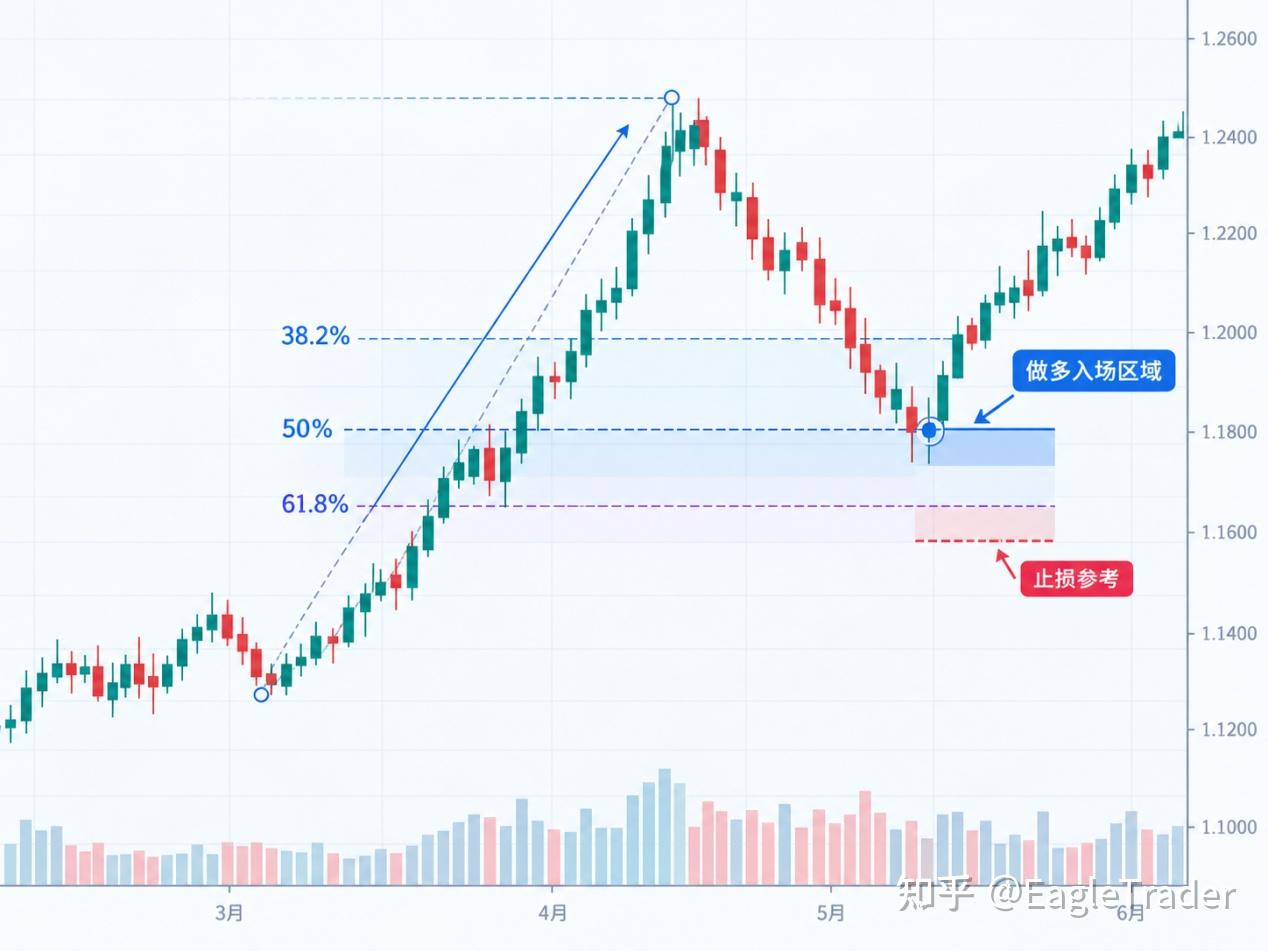
Fibonacci retracements are often used to observe potential retracement areas in a trend, with 38.2%, 50% and 61.8% being the more common reference levels.
Traders can first identify a clearer rising or falling band, and then observe the performance after the price retraces around the key ratio.
If the original entry logic is based on the fact that a certain retracement area is still valid, then when the price clearly breaks through the key level and the original structure is destroyed, it is necessary to re-judge whether there is a reason to continue to hold the transaction.
Therefore, Fibonacci is more suitable as a reference for stop loss areas, rather than mechanically setting stop losses when seeing a certain ratio.
02|Moving Averages: Watch to see if the trend changes
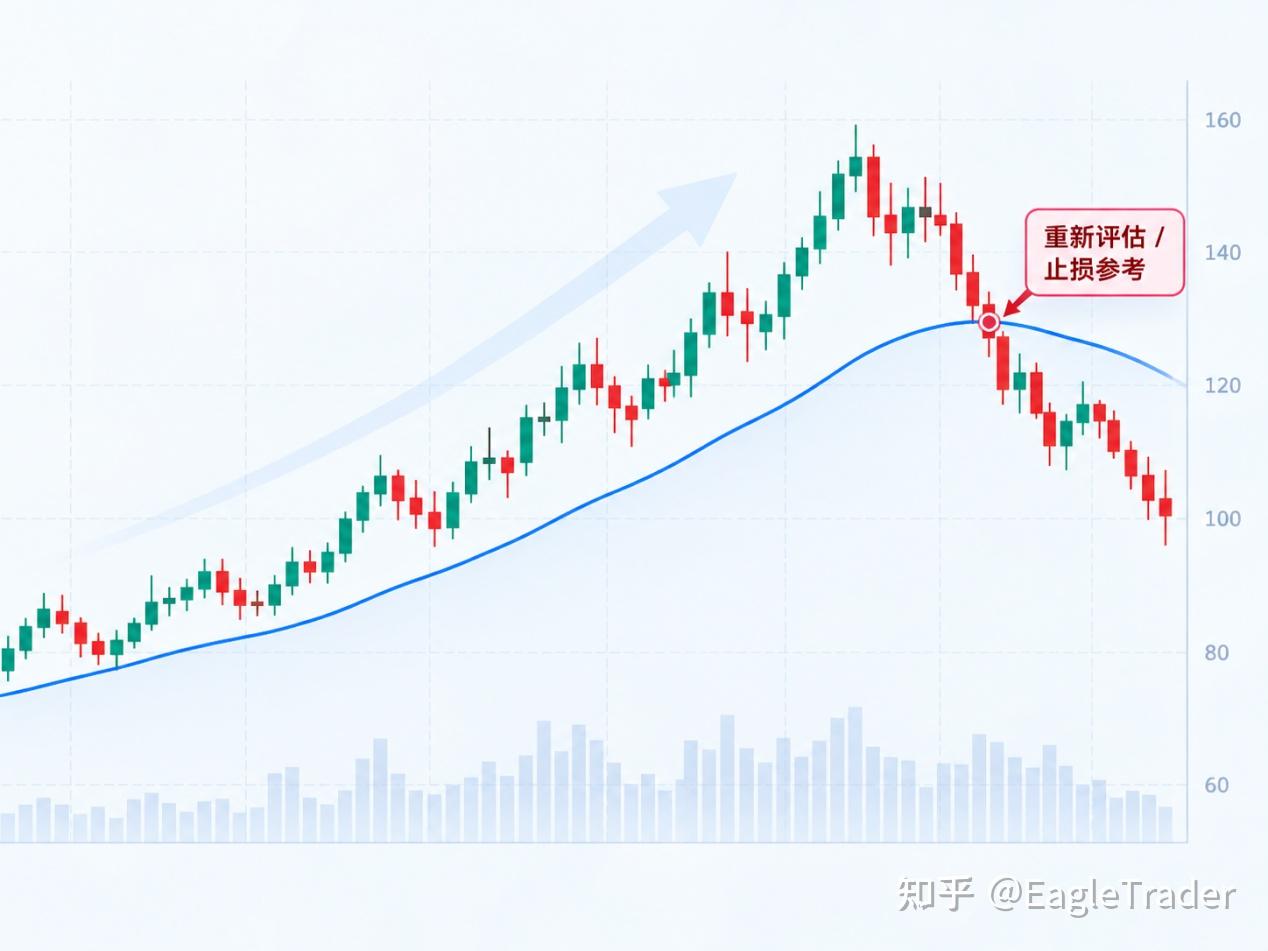
The moving average can reflect the average state of price movement over a period of time, so it is often used as a dynamic stop loss in trend trading.
For example, when the price runs on one side of a moving average for a long time, this moving average can be used as a reference for the trend status.
If the price effectively breaks through the moving average and the market structure changes simultaneously, traders can re-evaluate the original logic of the position.
Different moving average periods have different sensitivities.Short-period moving averages respond faster, but are more susceptible to short-term fluctuations; long-period moving averages are relatively smooth, and signals appear slower.
Therefore, when using moving averages to set stop losses, it is more important to keep the selected period consistent with your own trading strategy.
03|Trend Lines and Support and Resistance: Set Stop Loss Based on Structure
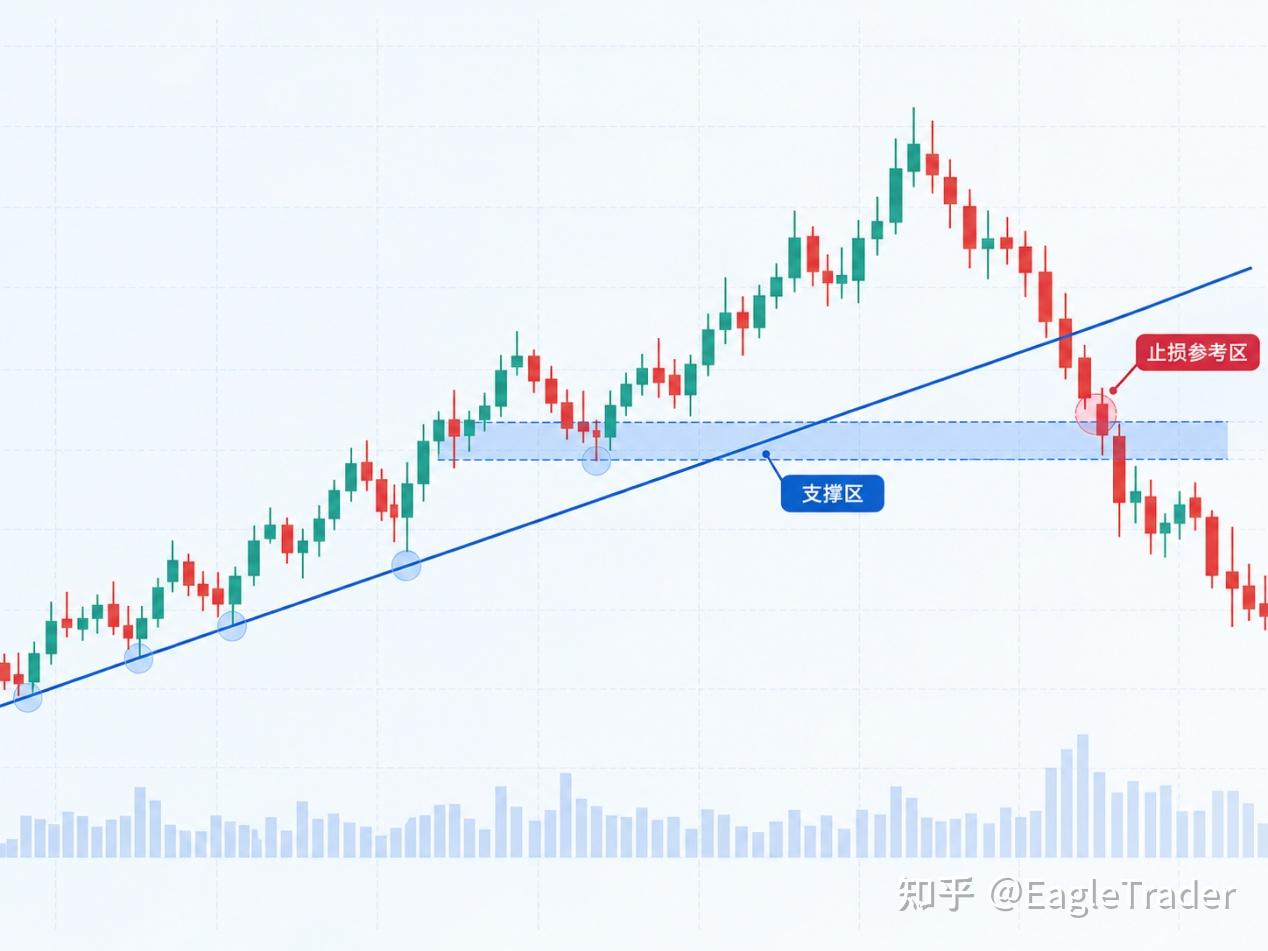
Trend lines, support and resistance levels come directly from the price structure, so they are also relatively intuitive reference for stop loss.
If a long trade is based on the validity of a key support area, then once the price clearly falls below that area, the original trading logic may change.
The trend line has a similar idea. When the price destroys the original trend structure, the position needs to be re-evaluated.
The key point of this method is to first clarify “under what circumstances the original judgment becomes invalid”, and then arrange a stop loss around this position, while leaving a certain amount of room for normal market fluctuations.
Compared with simply setting stop loss according to a fixed number of points, structural stop loss emphasizes the relationship between stop loss position and trading logic.
Fibonacci, moving averages, trend lines, support and resistance are just tools to help find risk boundaries.
Which one to use depends on the strategy, trading cycle and market environment.
EagleTrader Max sets retracement limits in the hope that traders will still put risk control at an important position in trading under a more direct account path.
The above content is only for sharing trading knowledge and does not constitute any investment advice.There are different applicable conditions for relevant technical methods. Please make independent judgments based on your own trading strategies and risk tolerance.