
ET Interview | Without risk management, no matter how accurate the market analysis is, it cannot save you.
- 2026年6月24日
- Posted by: Eagletrader
- Category: News
Among EagleTrader traders, He Shunwu is a trader with many years of real trading experience. With 16 years of experience in the financial market, 14 of which were focused on foreign exchange trading, he gradually formed a trading system with risk control, trading rules and probability advantages as the core.
During the process of participating in the assessment, he always maintained his own trading rhythm and verified the stability of the system by strictly executing the trading plan.
For He Shunwu, the accumulation of trading experience is not just about increasing his understanding of the market, but more importantly, establishing a trading system that suits him. From initially focusing on market trends to now managing transactions through rules, positions and probability, he has gradually developed a more systematic trading approach.
The market will teach traders the direction of learning
After He Shunwu entered the financial industry, he initially started with A-share trading, then came into contact with commodity futures, and gradually moved to the international gold, futures and foreign exchange markets.
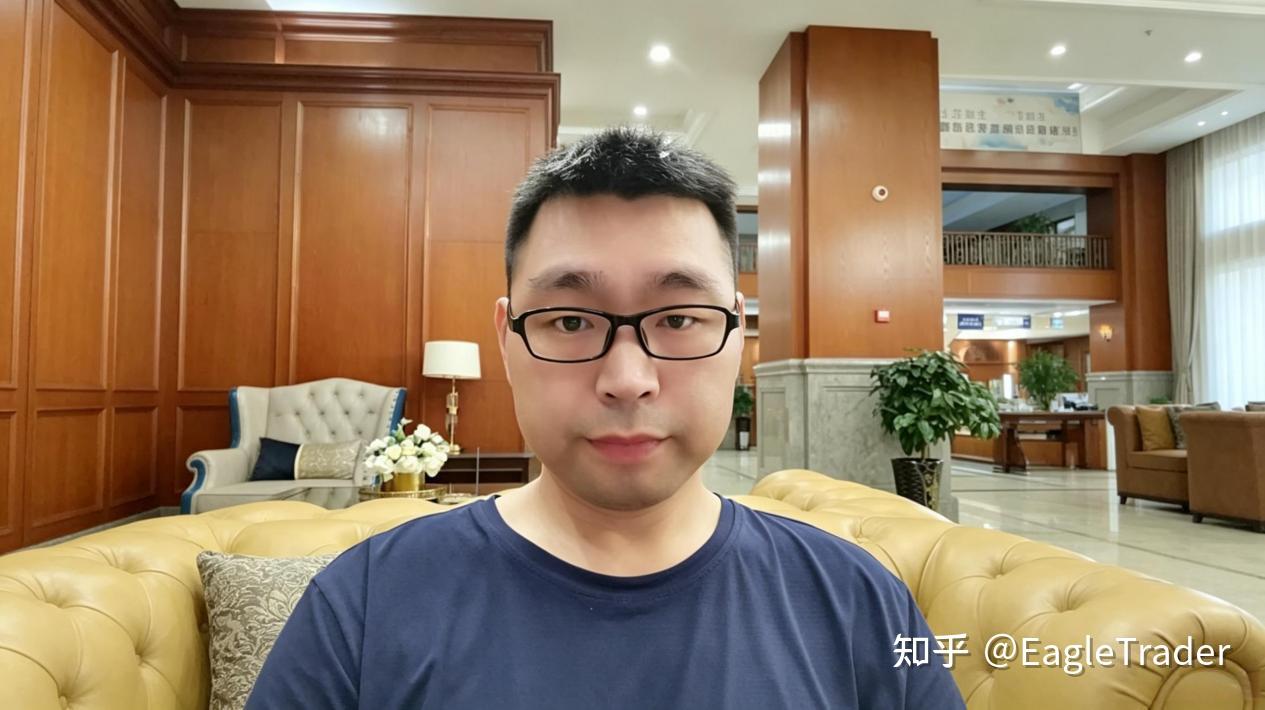
Like many traders, his trading system is constantly adjusted and formed through market experience. In the early trading stage, he tried to obtain higher returns by participating in the non-agricultural data market with heavy positions.
At that time, in the face of market fluctuations, he did not set a clear stop loss. After the loss occurred, he tried to reduce the cost of holding positions by continuously adding positions, which eventually led to serious losses in the account.
Looking back on this experience, He Shunwu believed that the failure made him re-understand the risks of trading.
Opportunities are always present in the market, but positions, risks and execution must be planned ahead. If a transaction loses its risk margin, no matter how good the market judgment is, it will be difficult to translate into long-term results.
Since then, he began to rebuild his own trading system and integrate risk management into every trading link.
Use probabilistic thinking to build a trading system
After years of accumulation of real trading, He Shunwu gradually formed his own trading method. Currently, he mainly uses price action swing strategies to find trading opportunities through technical analysis.
In trading decisions, technical analysis occupies a major proportion and is used to determine the price structure, key support and resistance positions, and entry and exit signals; fundamental analysis is moreIt is mostly used to determine the direction of the general cycle and avoid uncertain fluctuations caused by major data trends.
He believes that trading strategies need to be verified over a long period of time, and traders need to focus on the performance of the system in different market environments.
The result of a single transaction does not represent the value of the strategy. A mature trading system needs to reflect its advantages through a large number of trading samples.
Therefore, he will not change his trading logic because of a loss, nor will he arbitrarily expand risks because of short-term profits. In his trading framework, each transaction is a sample in probability statistics.
What traders need to do is to keep the rules consistent and let the system advantages be gradually reflected in long-term execution.
Let rules replace emotions and keep execution consistent
During the trading process, emotional changes have always been an important factor affecting execution. It is easy to become overconfident when making profits, and it is easy to rush to repair accounts when losing money. These psychological changes will affect trading decisions.
In order to reduce emotional interference, He Shunwu established a complete trading plan. Before each transaction, he will clarify the entry position, stop loss position, take profit target, position size and market failure conditions in advance.
When the market does not trigger a trading signal, even if a seemingly good opportunity appears, he will choose to wait.
In terms of risk management, he adopts strict position control methods. If the account’s risk tolerance is set to 100 points, he usually controls the risk of a single transaction to 1%-2%, and the overall risk of a single day to less than 3%.
Such risk planning allows the account to maintain room for adjustment in the face of continuous losses, and also helps him maintain a long-term and stable trading rhythm.
In the face of retracement, keep the system running
Retracement is a stage that every trader will face. For He Shunwu, the most important thing during the retracement period is to determine whether the trading system is still effective and maintain the original execution standards.
Based on past real trading experience, a regular retracement of about 5% usually takes 1-2 weeks to repair, and a larger retracement of about 10% may take about 1 month.
During the repair process, he will not increase his position in order to quickly recover his net worth, nor will he adjust his core strategy based on short-term performance.
If the market environment has not changed significantly and the system logic still holds, then the trading plan is still worth executing.
Verify trading ability in the assessment
Participating in the EagleTrader assessment is a process for He Shunwu to test his own trading system.
The risk limits, retracement requirements and account management rules in the assessment are highly consistent with his long-term trading philosophy. In his trading system, risk control always runs through the entire process.
From risk assessment before opening a position, to position management during the position holding process, to review after the transaction, there are clear standards for every link.
He believes that a standardized trading environment can help traders observe their execution capabilities more objectively, and can also allow the trading system to be verified under clearer rules.
The trading market changes every day, but what traders can control are their own rules and execution. For He Shunwu, the meaning of long-term trading is to improve the system through repeated market verifications, so that the probability advantage will gradually manifest over time.