
It is also a simulation training, so why are the endings of proprietary trading and ordinary simulation trading completely different?
- 2026年8月11日
- Posted by: Eagletrader
- Category: News
On the road to trading growth, the vast majority of traders will encounter two problems: First, they want to hone their strategies, but they dare not spend real money on trial and error; second, they are familiar with the rules when talking on paper, but once they face market fluctuations, their execution ability is overwhelmed by emotions.
EagleTrader believes that the proprietary trading model can precisely resolve these two major practical problems.

The simulated trading system is the core mechanism for newbie incubation and strategy polishing under the proprietary trading model. It is in sharp contrast to the results of ordinary retail investors directly starting real trading. The main value is reflected in three aspects:
Low wind Risk Simulation Environment: Zero-cost verification of trading strategies
Proprietary trading will build a standardized simulated trading environment that completely replicates the market fluctuations, matching rules, rise and fall mechanisms and transaction slippage of the real market. Market data, transaction logic and the real market are seamlessly aligned. The only difference is that there is no need to invest real funds.
Traders can rely on this risk-free simulation environment, strictly follow the established trading rules, entry logic, and risk control system, and repeatedly implement their own trading strategies.
Whether it is trend tracking, swing trading, arbitrage strategies, or customized position opening, take-profit, and stop-loss rules, it can be repeatedly tested and iteratively verified in a large number of market samples.
<img alt="" src="https://www.hudianbaoseo.cn/uploads/allimg/20260811/1786416765162485.jpg" width="654" height = 436 , unilateral and other adaptability, winning rate and error tolerance rate under different market conditions, quickly identify strategic loopholes, screen out trading systems with practical value, and complete the polishing of strategies from theory to implementation.
Rule-based simulated trading: tempering stable transaction execution capabilities
In addition to high-quality trading core profit logic. Trading strategies rely more on absolutely stable execution, and human greed, fear, and luck are the core reasons for the deformation of transaction execution.
The simulated trading model of proprietary trading is constrained by established trading rules, forcing traders to abandon subjective emotions and develop standardized trading habits in the long term. In the regular assessment of simulated trading, traders need to strictly follow the established rules to perform every step of operations such as opening, holding, taking profit, stopping loss, and position control, and eliminating illegal operations such as subjective prejudgment, random addition of positions, delayed stop loss, and early stop profit.
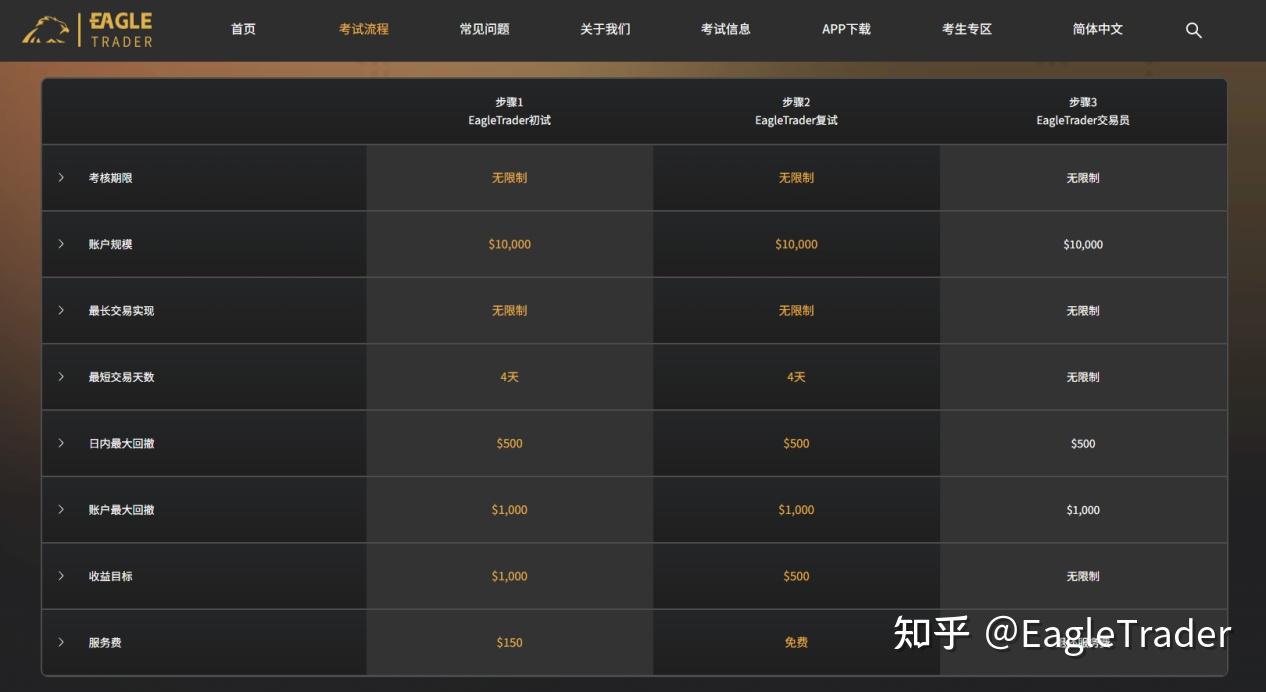
Day-to-day risk-free rule training can help traders strip away the interference of emotions on trading, form muscle memory-style trading execution, and cultivate a rigorous, self-disciplined and unified trading sense and operating mentality
This stable execution ability accumulated in the simulation environment will be transferred to subsequent real trading, allowing traders to still abide by trading rules, avoid emotional trading mistakes, and form a sustained and stable trading style in scenarios of real capital games and violent market fluctuations.
Different from ordinary pure simulation trading: have real profits outside of assessment. Incentives
Many traders confuse proprietary trading with ordinary pure simulation trading on the market, but there is an essential difference between the two. Ordinary pure simulation trading is only used as a training tool. No matter what the trading results are, it will not produce real profits. The training lacks realistic positive feedback, and it is easy for the simulation state to be excellent and completely invalid when entering the real trading.
Proprietary trading is not a simple simulation exercise. Traders complete strategy polishing and transaction execution in the environment. When the trading performance meets the platform’s established assessment standards, they can receive real trading incentive bonuses based on the account profit sharing mechanism.
<img alt="" src="https://www.hudianbaoseo.cn/uploads/allimg/20260811/1786416698192811.jpg" width="654" height = 305 With the incentive attribute of real returns, trading is no longer a simple paper exercise. Every qualified trading performance can receive positive feedback on the real level.
Relying on the multiple advantages of low-risk simulation scenarios + rule-based transaction assessment + incentive profit sharing mechanism, proprietary trading has achieved ” The multiple values of “scientific verification of strategies”, “trading mentality, polished execution” and “positive performance incentives” are also one of the core factors that distinguish proprietary trading from ordinary retail trading and pure simulation exercises.
In implementing the EagleTrader proprietary trading growth system, we Completely implement this set of assessment logic: instead of directly entering the high-pressure trading game, traders are guided to complete strategy verification and execution ability forging in the simulation environment to consolidate the underlying trading capabilities and help traders find a more secure path for professional trading growth.