
Why is the process of truly stable and profitable transactions always “extremely uncomfortable”?
- 2026年11月19日
- Posted by: Eagletrader
- Category: News
“In investing, what is comfortable is rarely profitable.”
——Robert Arnott)
This is because financial markets are not an environment suitable for relying solely on instinctive judgment.
Faced with rapid fluctuations, changes in profits and losses, and uncertainty, people are easily affected by emotions.
When the market rises rapidly, you are afraid of missing out, you are eager to pocket a little profit, and you are reluctant to stop the loss when you lose. These seemingly natural reactions are essentially giving priority to solving the current anxiety rather than the problem of the transaction itself.
Because of this, many of the truly difficult decisions in trading are precisely the ones that make people “uncomfortable”: waiting, cutting losses, giving up unplanned opportunities, and exercising restraint when emotions are strongest.
01|The “comfortable choice” that makes people most likely to relax their vigilance in trading
Looking back at many out-of-control transactions, you will find an interesting phenomenon:
The moment you make a wrong decision, you often don’t feel like you are making a mistake.
When the market rises rapidly, it seems natural to chase after it because “everyone is buying”;
When the account suffers a loss, it is easy to find reasons to continue to hold it, because as long as the position is not closed, you can still expect the market to come back;
After a string of profits, enlarging a position may even look like “taking advantage of the opportunity.”

These decisions happen easily because they instantly soothe anxious or inflated expectations.
But just because emotions are calmed does not mean that trading decisions are more reasonable.When “make me comfortable” starts to replace the trading plan, the risk has quietly arrived.
02|Why does proprietary trading need clear rule boundaries?
It would be very difficult to rely solely on traders to rely on self-restraint at every critical moment to remain rational.
Especially when there are continuous losses, account fluctuations, or a surge in confidence, human judgment can easily go astray.
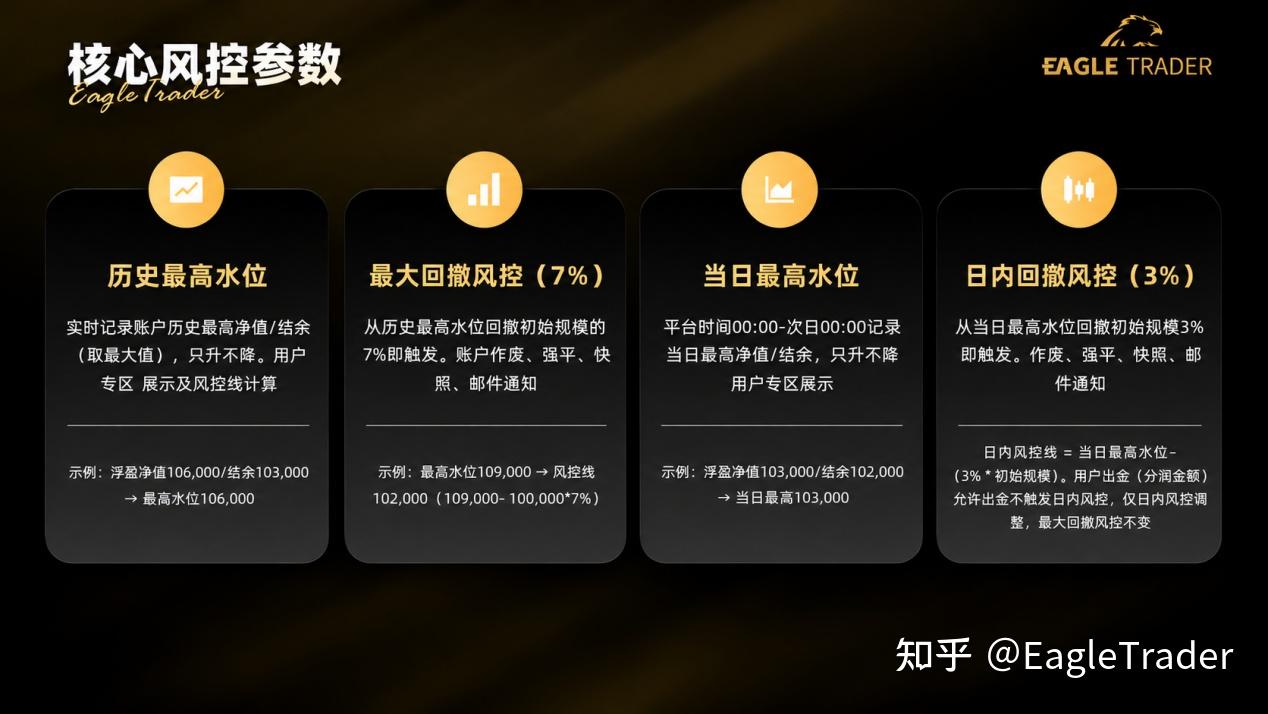
This is the core meaning of setting risk rules for proprietary trading:
Taking EagleTrader Max as an example, the maximum drawdown and intraday drawdown rules delineate clear risk boundaries.
When you want to continue to carry an order because you are unwilling to admit a loss, or you are eager to enlarge your position after a loss, the rules will constantly remind you: the space that your account can bear is limited.
This idea can help traders forcibly cut off the possibility of continuing to take risks when they are “top”.
Profit consistency rules limit excessive concentration of profits.
It prevents account performance from relying on a single extreme profit, forcing traders to abandon their gambler mentality and turn to stable output over a longer period.
The Eagle scoring system evaluates transactions from multiple dimensions such as skills, risk control, consistency and experience. It not only leaves no room for traders’ luck, but also provides traders with directions for trading improvement through scientific evaluation.
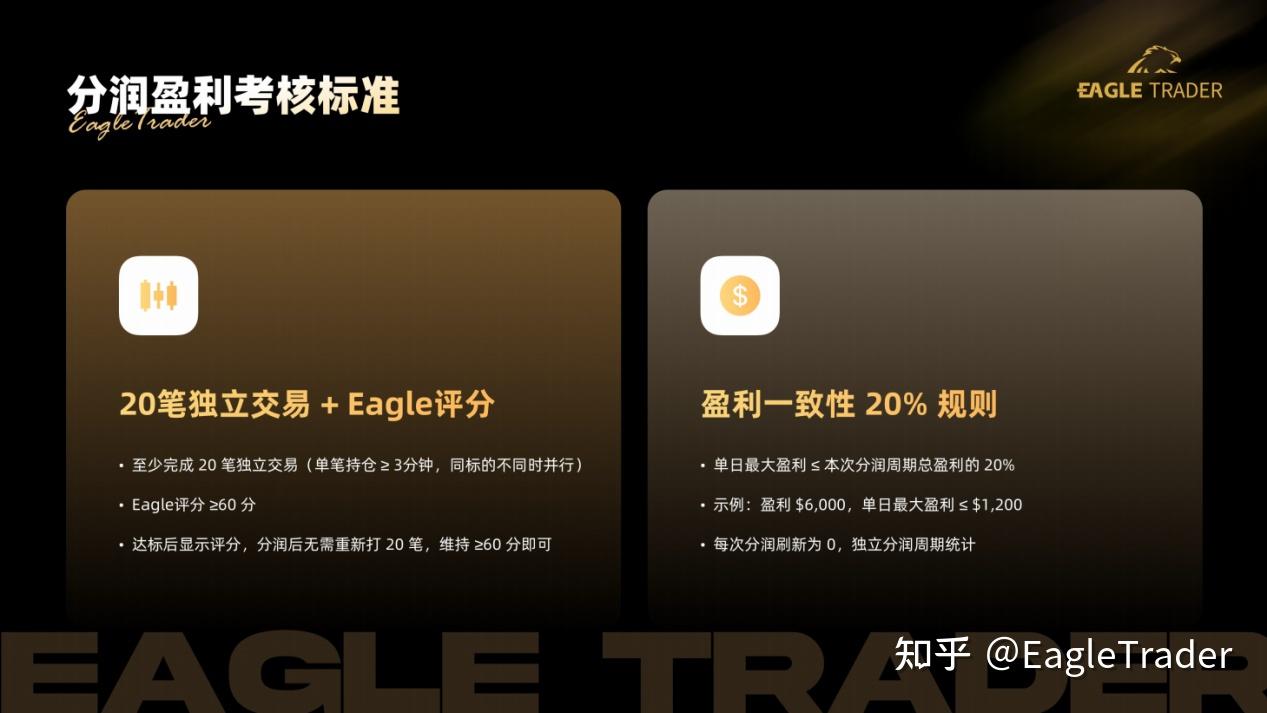
These mechanisms in proprietary trading are not intended to interfere with how traders trade, but to provide a clear external constraint for trading when emotions are most likely to affect judgment.
03|Use temporary “shackles” in exchange for true professionalism
When you first come into contact with proprietary trading, you will inevitably have a feeling of “not enough freedom”.
But freedom itself is not a problem. What really needs to be vigilant is: when emotions arise, people can easily find reasons for their impulses.
If you want to increase your position to recover after a loss, or if you want to enlarge your position after making a profit, you will also interpret unplanned opportunities as “I can do it this time.”
The value of EagleTrader’s rules is to give you pause at these moments.
It does not decide for you whether you can trade, but allows you to reconfirm: Is this transaction still planned? Is the current position still within the risk range? If the judgment is wrong, can the account still bear it?
When these issues gradually become trading habits, rules are no longer just external restrictions, but will slowly become part of the trading system.
Truly mature trading does not mean that there is no impulse and emotion at all, but that even if emotions appear, you still know what can be done and what should be stopped.
The so-called professionalization does not mean losing freedom, but having the ability to execute one’s trading plan more stably within the rules.