
Working part-time as a trader, how did he survive with limited energy?
- 2026年11月17日
- Posted by: Eagletrader
- Category: News
In the eyes of many people, traders seem to need to stay in front of a screen around the clock and lead a highly stressful life of watching the market.
But Teacher Zhou’s life trajectory breaks this stereotype.
His job is as a teacher.
During the day, he faced students on the three-foot podium; in the dead of night, he was a calm trader in the market.
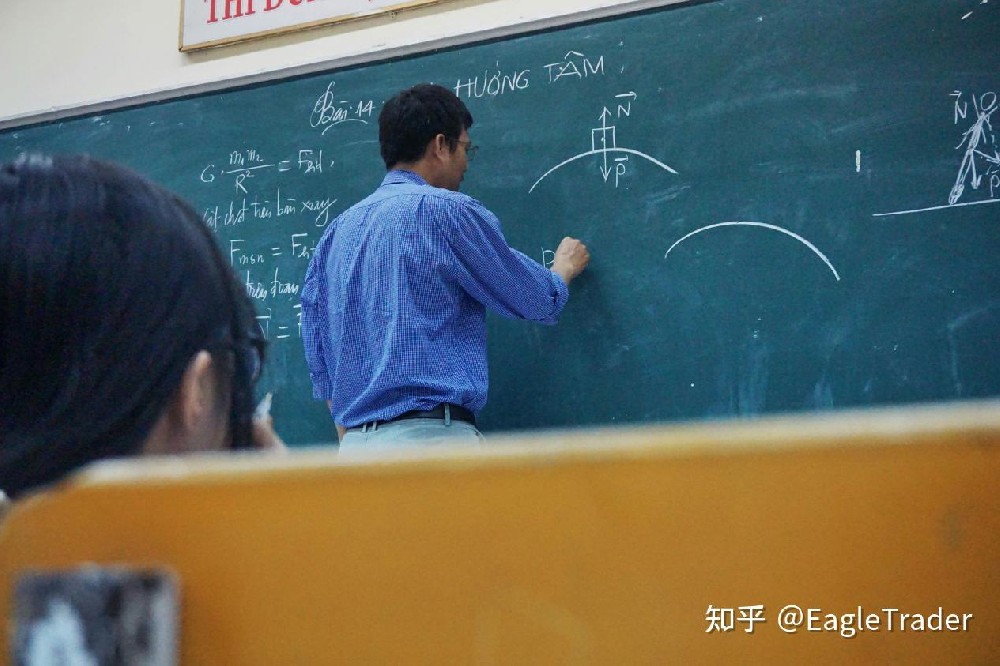
“My trading and teacher status do not conflict.” I have been working in the industry for 5 years, experienced the pain of liquidation, and also passed EagleTrader’s strict assessment.
If he had to sum up his five years of experience in a few words, it would be: restraint.
We chatted with this part-time trader a few days ago.
From an ordinary retail investor who paid tuition to a discipline enforcer who now locks the risk of a single transaction at 0.5%, his story may bring some real touches to many traders struggling in the market.
1. From “rushing to win back” to learning to “wait”
“Liquidation is the only way for every trader.” Recalling that experience, he admitted that the biggest enemy at that time was not the market, but the mentality, “After losing money, there was only one thought in my mind: too eager to win it back.
As a result, the more anxious I was, the more I lost, and I invested all my principal directly.”
That painful lesson made him understand an iron rule: the market will never lack opportunities, but if the principal is gone, you will really be out.

Now, he has long given up on being the “boss” he used to be.
Now if he encounters an unexpected large retracement during the session, he has set a mandatory rule for himself: “If the loss triggers a psychological bottom line, I will choose to take a forced break for half an hour to an hour and stay away from the screen.
I know there will be countless opportunities in the future, so I don’t waste these few minutes to get angry.”
2. Survival rules for part-time trading
As a part-timer, how does Mr. Zhou maintain stability with limited energy? His answer is: focus on the big and let go of the small, mainly relying on fundamentals.
When talking about the weight of decision-making, he gave a ratio that is very biased towards the macro direction: fundamentals account for 70%: “Because fundamentals are the direction that can trigger a ‘black swan’, it is the largest reference system.” Technical aspects account for 20%, and market experience accounts for 10%.
In terms of risk management, he implemented ‘restraint’ into every actual operation.
The risk of a single transaction is locked at 0.5%: never take a heavy position, and never leave your destiny to a single gamble.
Dynamic trailing stop loss: When making money, learn to use trailing stop loss to lock in profits and prevent a huge “roller coaster” retracement.
Refuse to trade frequently: “As long as you trade less frequently, there will be no big retracement.
The only reason for a big retracement is often a mental breakdown.”
3. Sharing of trading experience
Looking back on the experience of taking and passing the EagleTrader assessment, Mr. Zhou’s biggest feeling is that this is not only a test, but also a systematic discipline for his own trading habits.
For those newcomers who have just entered the industry or are preparing to take the assessment, he did not share any profit secrets. Instead, he left three most practical sentences:
Control risks: Always put survival first, and control single risks within tolerance.
Trade less frequently: Don’t treat trading as playing a game. Most of the time, “waiting” is a trader’s main job.
Overcome emotions: Don’t be swayed by greed and fear. In the end, the competition is not about who makes money faster, but who makes fewer mistakes.
From teacher to part-time trader, Mr. Zhou’s five years are the epitome of an ordinary retail investor moving closer to “professional discipline”.
In this market full of temptations, he chose to use the stupidest and most restrained method to slowly move towards stability.